
Website Guide
Reading a Yixing Pot
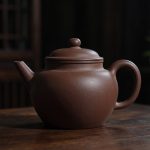
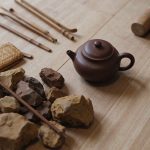
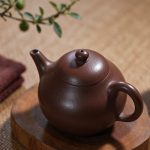
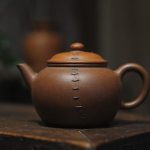
This site explains one object: an unglazed teapot made from iron-rich clay dug near Dingshu, in Yixing. It is not a catalogue. The pages try to answer the questions a curious person asks when holding such a pot for the first time — what it is made of, why it looks the way it does, how to tell what you are looking at, and why the same material can cost wildly different amounts.
Where a claim can be checked by hand or under a light, the page says how. Where it cannot be checked, the page says that too.
You are here — A Guide to the Site
The material
Start here. Zisha is a stoneware clay fired hot enough to turn to stone, but deliberately short of vitrification, and never glazed. Most of what people say about these pots — heat, patina, the sound when tapped — follows from that single fact.
Yixing and Dingshu: Where the Clay Comes From↗The geology and the town, and what a place name does and does not establish.
Zisha, Porcelain and Stoneware Compared↗Three materials developed for three different jobs, and how each behaves in the hand.
Why the Pots Are Small↗Capacity as a consequence of brewing method, not of fashion.
Why One Clay Fires to Many Colours↗Iron oxide, kiln atmosphere and temperature: colour as a record of process.
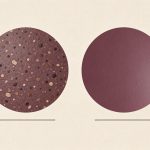
Reading Clay Texture↗Grain, density and mineral specks — what a surface tells you before anything else does.
Glossary↗The vocabulary used across this site, defined plainly and without mystique.
Form as a solution
A pot’s shape is not ornament first. It is a set of answers to practical problems: how to build a body without it collapsing, how to fit a lid that seals and still lifts, how to attach a spout that pours. Read the forms that way and their differences start to make sense.
Shipiao, the Stone Dipper↗The commonest beginner shape, and the balance of three triangles inside it.
Xishi: Roundness and the Spout↗Why a round body with a short spout is so forgiving to pour from.
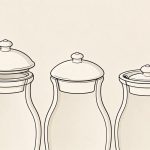
Jinglan, the Well Railing↗A body built from straight lines, and what that costs in forming and firing.
Dezhong, the Bell↗A formal silhouette with a strong shoulder: heat, weight and a stable pour.
Shuiping↗The flat, simple form that experienced drinkers keep returning to, and why.
Why Squares and Hexagons Are Hard↗Corners, lid outlines and joints — the real difficulty in a faceted body.
Ribbed and Floral Forms↗Chrysanthemum and pumpkin bodies, where every line is a thin section.
The clay families
“Zisha” is a family of related clays, not a single substance. The names matter because they describe different mineral content, workability and fired colour — and because the most famous of those names is applied far more widely than the material it originally described.
What “Zhuni” Really Means↗A scarce clay and a heavily used word — separating material from label.
Duanni and Its Variants↗The coarse, mineral-rich branch and the colour effects it produces.
Clay Purity: What Inclusions Tell You↗Specks and flecks as evidence of processing, not as defects.
Why Some “Purple” Pots Are Not Purple↗Colour names describe a clay family, not a pigment.
Chemical Safety of Decorated Pots↗Lead, barium and glazes: what to consider on a coated or enamelled body.
Old Clay and New Clay↗What ageing does to workability, and what it does not do.
Does Clay Change the Taste of Tea?↗What is measurable, what is preference, and what is repeated without evidence.
Who made it
Marks and titles are a paper trail, and paper is the easiest thing in this field to reproduce. These pages explain what a seal physically is, what the ranking system certifies, and where documented authorship ends and storytelling begins.
Reading a Maker’s Seal↗Seal script, character order, and the conventions that govern a base mark.
Famous Names of the Ming and Qing↗The earliest recorded makers and what their work is described as doing.
The Masters of the Republic Era↗The names that anchor the modern canon, and the work behind them.
Studio Pots and Signed Pots↗Assistant-made, master-signed, signature-only: three relationships to a name.
How a Potter Trains↗The years behind a competent pot, and why they show in walls and joints.
Recognising a Hand by Form↗How proportions and finish give away a maker when the seal cannot.
When a Name Is Printed, Not Made↗The commonest substitution in this market, and how it appears under light.
How to read a pot
None of this is secret knowledge. Every observation below can be made by anyone with ten minutes, a torch and warm water. The pages are ordered by how much each piece of evidence can actually establish — from the inside of the wall down to the story attached to it.
Three Forming Methods↗Hand-built, moulded and cast bodies, and the traces each leaves behind.
The Interior as Evidence↗Wheel lines, spout ridges, and why the smooth wall is the informative one.
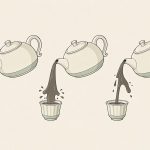
The Pour Test↗Fill, pour, stop: what a stream tells you about bore, wall and lid.
The Seal as a Physical Event↗Depth, stroke quality and displaced clay — reading an impression, not a name.
Patina, Real and Simulated↗Depth versus gloss, unevenness, and the damp-cloth test.
Claims of Age↗Staining, waxing and artificial wear; what genuine old surfaces look like.
Where Cheap Pots Come From↗Slip casting, press moulding, decorated bodies: production, explained.
Sound and Weight: Two Narrow Tests↗Useful for cracks and under-firing; useless for identifying clay or origin.
What an Expert Can and Cannot Tell You↗Who has standing, what a written opinion covers, and where it stops.
How a pot changes
A zisha pot is not a stable object. Its open structure takes in tea, water and heat and responds to how it is treated. This is a materials story first and a ritual second: drying, thermal stress and porosity explain nearly everything that happens to a pot in use.
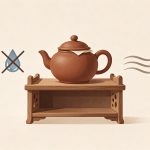
Rinsing, Drying and Resting↗The routine that keeps a pot sound, and the reasoning behind each step.
Thermal Shock and Cracking↗Why thin sections fail when hot water meets cold clay, and how to avoid it.
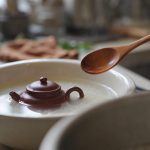
Seasoning: What Actually Helps↗Boiling, scrubbing and strong tea — which of these do anything useful.
Drying and Storage Between Sessions↗Why fully dry matters, and what an airtight box does to a damp pot.
Mould: Porosity as a Risk↗The same property that seasons a pot lets it grow mould. How to clear it.
Odour and Contamination↗Four smells, what each indicates, and why detergent is the worst of them.
Distinguishing Stain from Patina↗What can be cleaned, what should be left alone, and what cleaning costs you.
Damage and Repair↗Chips, cracks and broken spouts: what can be fixed, and what cannot.
When a Lid Sticks↗Swelling, residue and grit: causes, and the gentle sequence that frees it.
Why prices differ so widely
Two pots of similar size and colour can differ tenfold in price. That is not irrationality; it is six variables stacking. Understanding them is the difference between being able to explain a price and merely reacting to one — whether or not you ever intend to pay it.
Four Tiers of the Market↗What is actually being made at each level, and what it is made of.
Handmade and Cast: The Gap Explained↗Hours, skill and loss rate — and why thin walls are expensive to survive.
Difficulty: Joints, Not Decoration↗Why a faceted body costs more, and why cheap faceted pots are moulded.
What a Title Is Worth↗The premium for certainty of authorship, and the arrangements that dilute it.
Capacity and Price per Millilitre↗Why small pots cost more per unit volume, and where the curve flattens.
Rare Clay: Claims and Evidence↗Scarcity, depletion and how much of a rarity claim can be tested.
Old Pots and the Arithmetic↗Antique, vintage and old-looking: three markets that get confused.
How Auction Prices Work↗Premiums, condition reports and the limits of what a result proves.
Pots as Assets: A Sober View↗Liquidity, carrying costs, and why appreciation is a poor reason to buy.
Context: where the object comes from
Why does the pot look the way it does? Because four centuries of tea practice, kiln technology and literary taste shaped it. The history is not decoration on the object; it is the record of the decisions that produced it.
The Ming Period↗Leaf tea, built bodies and hand-fitted lids: the moment the form was invented.
The Qing Period↗Thin walls, smaller pots, a wide design vocabulary, and the signing conventions still used.
The Republican Era↗The hinge between craft and industry, visible in a decade of production.
The Factory Period↗Collective production, quality grades, and how marks were assigned.
Kilns and What Heat Decides↗Wood, electric, oxidation and reduction: firing as the second half of the craft.
Literati Taste↗Plainness and inscription: the aesthetic argument that still sets the standard.
How Zisha Reached Europe↗Tea routes, metal mounts, and the provenance that survives in old inventories.
Zisha in Japan↗Sencha practice, named objects and the paper trail that documents them.
The Modern Revival↗Private studios, craft titles, and the return of thin walls.
Going further
If you would rather read a continuous account than browse, or want to handle real objects rather than photographs, these are the natural next steps.
Books, Museums and Where to Look↗Sources worth reading and collections worth visiting.
Myths, Checked↗The claims you will hear repeatedly, sorted into true, partial and invented.
Real or Fake: What to Question First↗A short orientation to the questions that actually have answers.
Brewing in One, Step by Step↗The practical sequence, for anyone who wants to use the object rather than study it.
Five Numbers Worth Knowing↗Capacity, wall thickness, pour time and two other quantities that come up constantly.