Buying Online: The Six-Step Flow
The sequence from listing to delivery
Buying online is not a single decision but a short process, and most disappointments come from skipping a step rather than from choosing the wrong seller.
Step 1: read the listing sceptically
Look for four facts: capacity in millilitres, forming method, clay family, and return policy. If any of them is missing or vague, that information is the first thing to ask for. Photographs chosen by the seller will always show the pot’s best side; do not form an opinion from them.
Step 2: ask specific questions
Good questions get useful answers:
- “Is the interior smooth all round, or does it show wheel marks?”
- “Does the pour dribble when you stop at two-thirds full?”
- “What is the wall thickness at the rim?”
- “Is there any repair or chip not visible in the photographs?”
- “What is the return window and who pays return shipping?”
Vague answers to specific questions are your answer.
Step 3: ask for a video
The single most effective request: one continuous take, filling, pouring, stopping, then turning the pot over with a torch inside, then rotating it under a light. This reveals method, pour, surface and hidden damage in under a minute. Sellers with sound pots send it; sellers without one change the subject.
Step 4: agree the terms in writing
Confirm price, shipping cost, return window and the condition described, in the channel’s messaging record. That record is what you will rely on if the pot arrives damaged or misdescribed.
Step 5: pay in a way that leaves a record
Use a method with buyer protection and an evidence trail. Avoid payments that leave no record and no recourse, whatever the discount offered.
Step 6: on arrival
- Photograph the parcel before opening if it looks damaged.
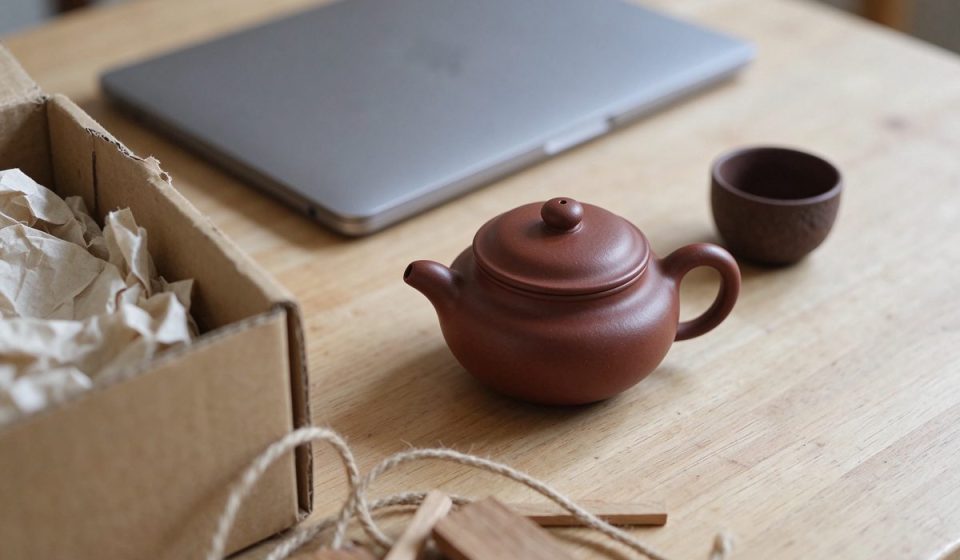
- Unpack and inspect in daylight, then with a torch inside.
- Fill and measure capacity; compare with the listing.
- Pour, twice; check the stop.
- If anything contradicts the description, notify the seller within the return window, in writing, with photographs.
Common failures and their fixes
- Arrived with a chip — report immediately, photograph the packaging; damaged-in-transit claims depend on the evidence.
- Pour is poor — return it. A pour cannot be fixed from your side of the transaction.
- Interior is cast — return it; the listing misdescribed the method.
- Capacity is short — often a misunderstanding of brim versus usable volume; check the listing wording before disputing.
The one rule that prevents most losses
Do not buy a pot you cannot return unless you have seen it pour on video. Everything else can be argued about after delivery; the pour is the thing you will live with every session.