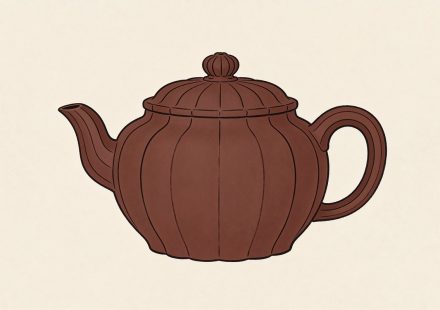
Ribbed and Floral Forms: Chrysanthemum and Pumpkin
Repetition has no tolerance: rib alignment, equal depth, lid-to-body matching, and whether a floral pot still brews.
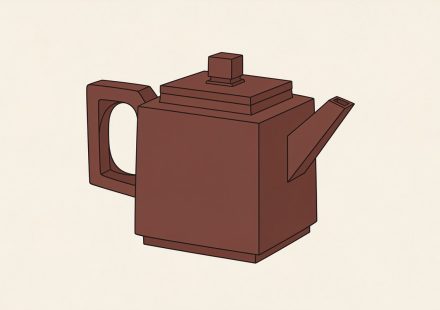
Square Pots: Why Four and Six Sides Are Hard
Slab-built bodies, corner joints, firing losses and lid fit on four edges at once — the discipline behind sifang pots.
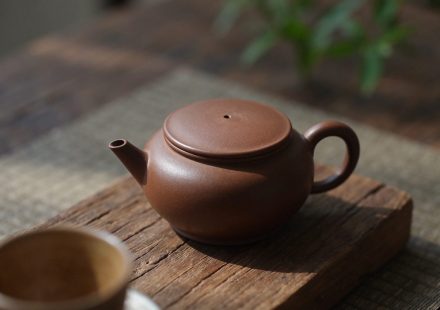
Shuiping: The Most Practical Shape
A nearly horizontal spout and a flat top make this the easiest pot to pour. Horizontality checks and construction clues.
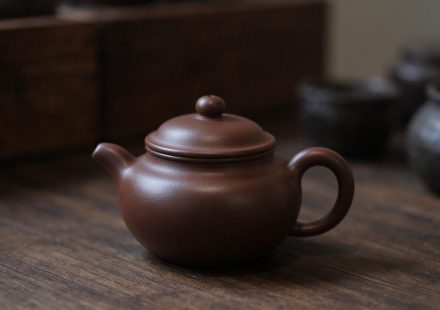
Duoqiu: Stacked Spheres
Body, lid and knob as three decreasing spheres. Where the stacking goes wrong, and why a spherical pot is awkward to empty.
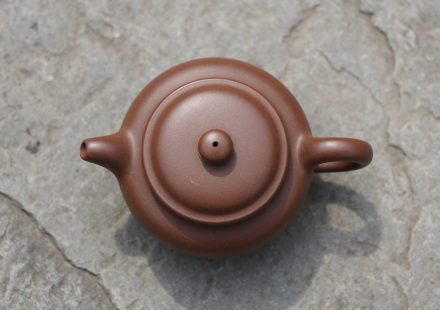
Fanggu: The Reference Round Pot
The plain wide round form potters use as a test. Circularity, off-centre lids, foot finishing, and why it suits almost everyone.
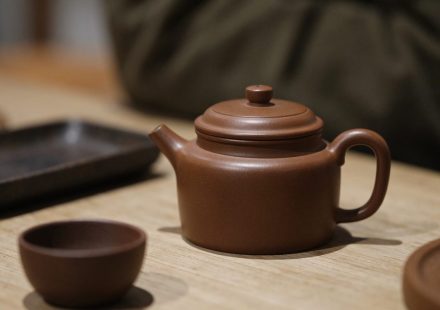
Dezhong, the Bell: A Formal Silhouette
An upright bell-shaped body with a short neck and narrow spout: proportion, heat retention, and the tall-form balance problem.
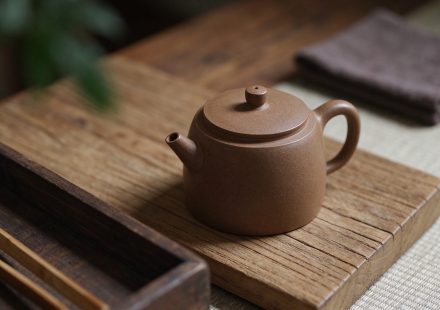
Jinglan, the Well Railing: A Pot Built from Straight Lines
A cylinder hides nothing. Wall plumbness, rim level, lid seating, spout joint, and how straight forms expose craftsmanship.
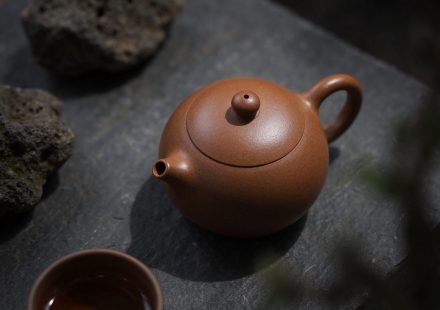
Xishi: Roundness and the Spout
The soft compact classic, and the one weakness its short low spout creates. Proportions, clay pairing and what to test in the pour.
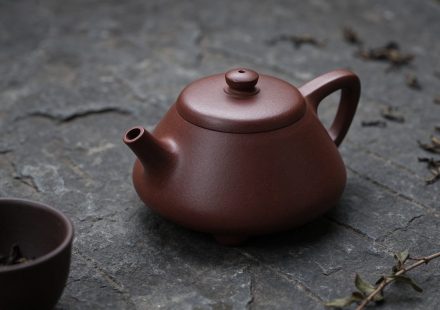
Shipiao, the Stone Dipper: Balancing Three Triangles
The most discussed round form: shoulder-to-foot taper, lid line, spout height, and the failures that turn it into a bucket.
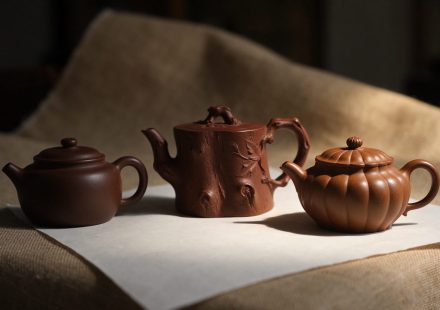
The Three Families of Form: Plain, Floral, Ribbed
Plain geometry, naturalistic modelling and regular ribs are three different disciplines. How to tell them apart and what each demands.