Shipping Abroad: Packing, Duty and Damage Claims
Shipping a fragile object internationally
Zisha travels well if it is packed properly and badly if it is not. Most damage happens in the last kilometre, when a parcel is handled quickly, and most disputes happen because nobody photographed the packing.
Packing that works
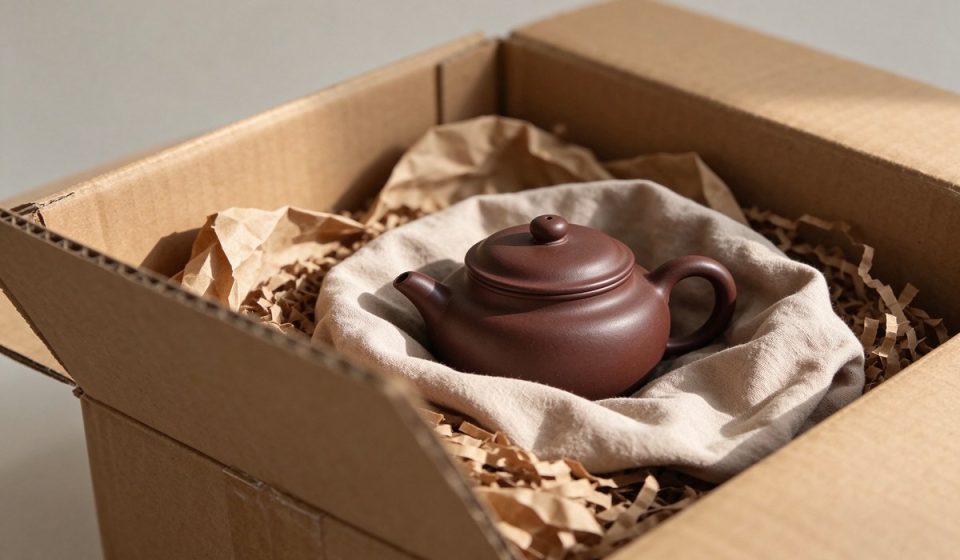
- Pot in a cloth bag, lid wrapped separately , then a rigid box with at least three centimetres of padding on every side.
- Double-box : the rigid inner box inside a larger carton with filler between them. This is the single measure that prevents most breakage.
- No loose items rattling against the pot; cups wrapped individually.
- Mark the box fragile and indicate “this side up” — carriers do read these, sometimes.
Customs, duty and declarations
Declare the object accurately: ceramics, teaware, with the actual value. Under-declaring to reduce duty voids insurance and creates a dispute if the parcel is lost. Keep the commercial invoice and the tracking record together.
Duty and tax thresholds vary by destination; a parcel’s landed cost can be meaningfully higher than the price paid. Ask the seller to state the shipping terms clearly — who pays duty, and whether the parcel is DDP or DAP — before you buy.
Insurance
Insure the pot for its purchase price, not for a nominal amount. Document the condition before shipping: photographs of the pot, the packing process, and the sealed box. Insurers ask for exactly this evidence when a claim is made.
When it arrives damaged
- Photograph the parcel before opening if the outer box is deformed.
- Photograph the packing as you unpack, layer by layer, before removing the pot.
- Photograph the damage in daylight and under raking light.
- Notify the seller and the carrier in writing within their stated windows.
- Keep the packaging until the claim is settled; carriers may require inspection.
What not to ship
Do not ship a pot that has just been used and is still damp — a week in a sealed parcel in a humid container is enough to produce mould. Dry it thoroughly, lid off, for two days before packing.
Returns across borders
Cross-border returns are expensive and often cost more than the pot. This is why the return policy matters more for international purchases: confirm in writing whether the seller covers return shipping and whether duty is refunded. A “return accepted” policy that leaves you paying two-way freight and non-refundable duty is not a return policy.
The practical calculus
For inexpensive pots, buy locally — the shipping and duty can exceed the saving. For a specific pot you cannot obtain locally, budget the landed cost, buy from a seller with documented packing practice, and insure it. The pot will arrive intact more often than not, and the exceptions are manageable if you have photographs.