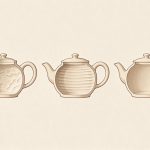
Shape Difficulty: Why Joints Cost More Than Ornament
Difficulty is about joints, not decoration
Two pots can look equally elaborate and differ threefold in cost, because what makes a shape hard to make is not ornament but the number of joints, the number of thin sections, and whether the form must be built or can be moulded.
The easy end
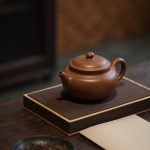
A plain round body — shipiao, xishi, shuiping — is the cheapest form to make well. The body can be built on a wheel head, the lid is circular and easy to fit, the spout leaves the wall at a standard angle. A competent maker can produce these reliably, and the shape has been refined over centuries so the proportions are known.
The middle
Flattened and squared bodies add corners: the base must be flat and true, the wall must turn an angle without cracking, and the lid must be cut to a non-circular outline that still seals. Ribbed bodies add a series of raised lines that must be uniform and must not distort when the wall dries.
The hard end
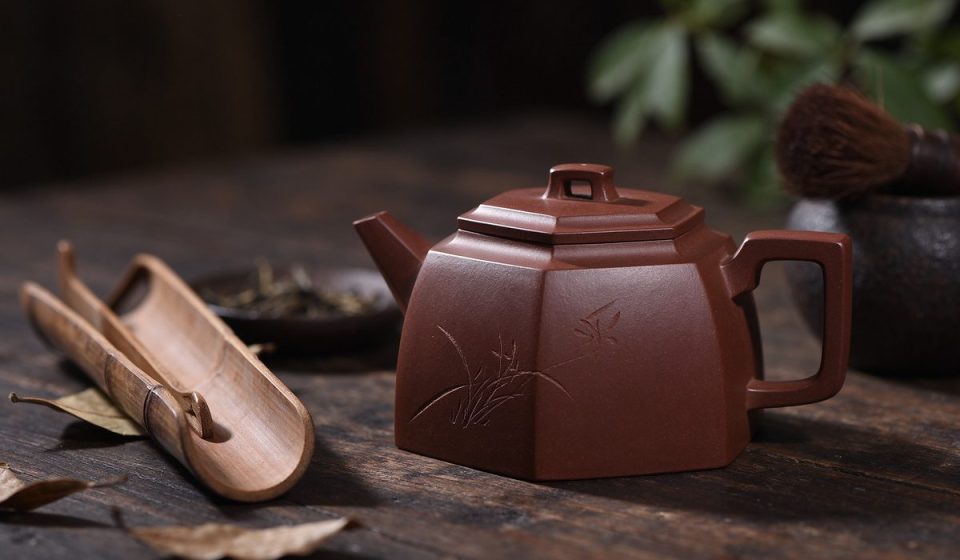
- Multi-facet bodies. Every facet is a joint and a potential crack; a hexagonal or octagonal pot with a matching lid is several times the work of a round one.
- Bodies with integral ornament. Raised bands, appliqué, carved panels — each is a thin section that can fail.
- Unusual spouts. A spout that leaves the wall at a shallow angle, or a two-part spout, is difficult to bore and difficult to attach.
- Very thin walls. Under about 2 mm, the margin between forming and collapse disappears.
- Very small pots. The same joints in a 60 ml body, with less material to work with.
Why difficulty costs more than time
It is not only the hours. A hard shape has a high failure rate — in forming, in drying, in firing. A maker who attempts a faceted pot may lose several before one survives, and the survivor is priced to cover the losses. This is why difficulty premiums are large and why cheap “hard shapes” are usually moulded.
How to judge difficulty for yourself
- Count the joints you can see: each change of direction in the wall is one.
- Look for thin sections: the rim, the lid edge, the spout tip, the band edges.
- Check whether the lid outline is truly matched to the body and seals along its whole perimeter.
- Feel the wall thickness at the rim and at mid-height.
- Ask what the pot would cost in a plain round shape from the same maker and clay. The difference is the difficulty premium.
Difficulty is not beauty
A hard shape made badly is worse than an easy shape made well. Plenty of expensive faceted pots pour badly and have lids that rock. Difficulty explains price; it does not justify quality. Judge the pot first and the difficulty second.
The collector’s angle
Difficult shapes with clean joints are where craft value is most visible, and they hold value better than plain pots because they cannot be mass-produced convincingly. That is the real reason collectors pay for difficulty.