Identify Five Checks
Five observations, in order of reliability
Authenticity advice usually arrives as a list of “tells”, most of which are unreliable. What follows is ordered by how much each observation can actually prove. Spend your effort at the top of the list.
1. The interior
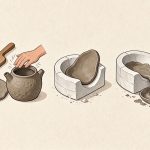
Turn the pot over and light the inside. This is the most informative surface on the object, because it is the hardest to fake and the least photographed. Expect slight unevenness, faint concentric wheel lines, a small ridge where the spout pierces the wall, and evidence of the join. A glassy, perfectly smooth interior with no marks is cast, whatever the listing says.
2. The pour
Fill with water, tip, stop. You want a coherent stream that begins immediately and ends without a dribble down the spout. A pot that fails this fails as a pot, regardless of its age or seal. This single test eliminates most expensive disappointments.
3. The lid
Three things: it lifts with a fingertip, it does not rock when seated, and it does not fall out when the pot is tipped slowly. A lid that binds will seize when hot; one that rattles means the seat was not ground properly.
4. Weight and sound
Well-fired zisha is dense. A pot that feels light for its volume is thin-walled, under-fired, or made of a leaner body. Tap the lid against the body: a clear short ring is good; a dull thud suggests a crack, a filled repair, or an under-fired body.
5. Surface behaviour
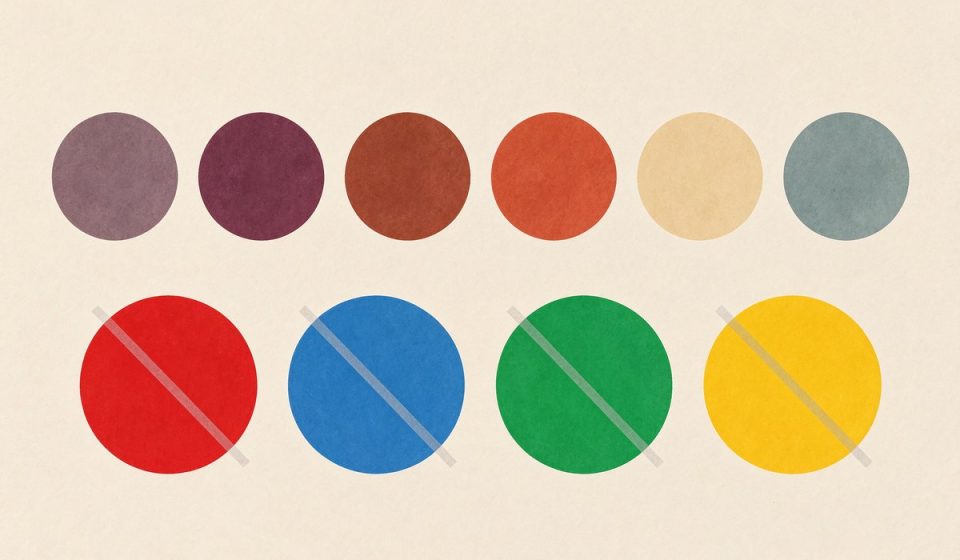
Grain, mineral specks, colour variation and a matte finish. Real clay shifts tone as you rotate it under a light. Uniform saturation with a plastic sheen suggests a coating. Check the base-ring interior and the lid seat — the two places where coatings cannot be applied evenly.
What is not on the list
- The seal. Easy to copy, easy to borrow, meaningless alone.
- The certificate. Issued by the interested party.
- The story. Cheapest thing in the shop.
- The colour name. A category, not a pigment.
How to weigh the evidence
If the interior and pour are right, the pot is a real, usable pot and the remaining questions are about grade, not authenticity. If the interior is cast and the pour dribbles, no seal, certificate or story rescues it. That is the whole method: physical evidence first, paper last.