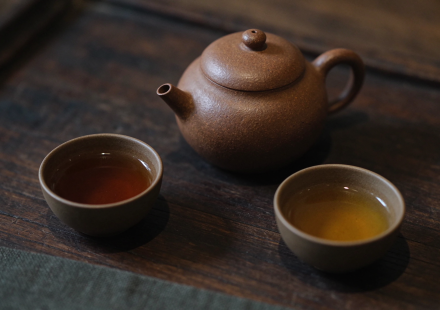
How Clay Affects the Taste of Tea
Heat, absorption and geometry do the work. Family tendencies, the honest limits of a pot, and a two-vessel test you can run at home.
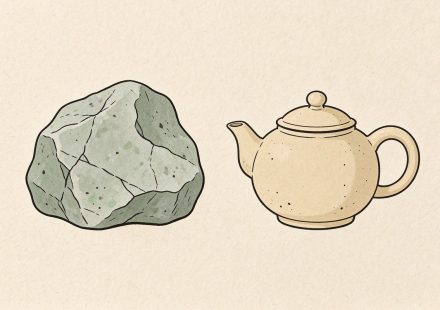
Why Some “Purple” Pots Are Not Purple
“Purple sand” names a family, not a colour. Iron, atmosphere and firing, and the four places to look for applied colour.
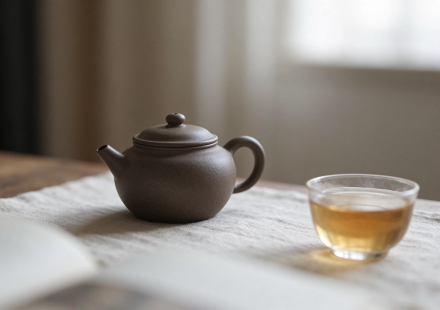
Chemical Safety: Lead, Barium and Glazes on Zisha
Unglazed bodies are the low-risk case. Where the real concerns sit — slips, decoration, repairs — and what you can check at home.
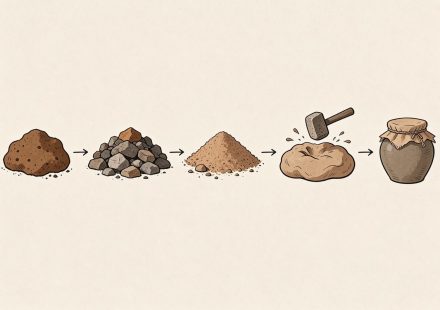
Old Clay vs New Clay: Does Age Matter?
Ageing makes clay more workable, not tea more delicious. How to separate aged body from “old mine clay” as a price story.
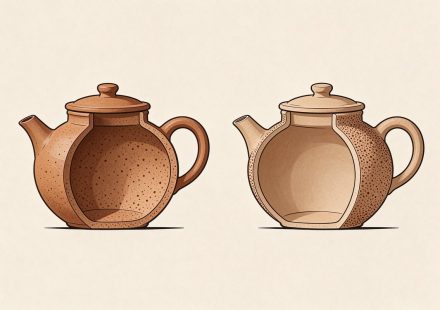
Clay Purity: What Inclusions Actually Tell You
Pure clay, temper and blends: what processing and grit do, what inclusions should look like, and two things that are not purity tests.
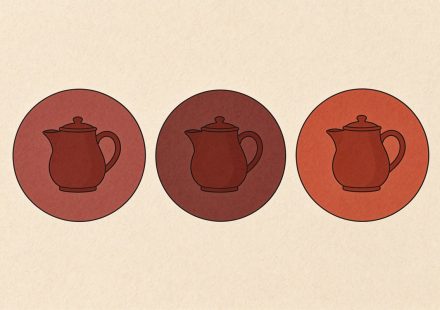
Why the Same Clay Fires to Different Colours
Iron, atmosphere, temperature and kiln position explain why one clay produces red, brown or grey pots — and why perfect uniformity is suspicious.
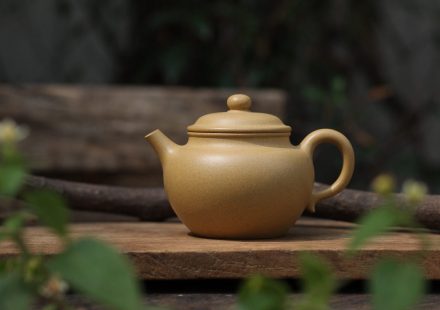
Duanni and Its Many Variants
The pale clay: low iron, open body, easy to imitate and easy to stain. What to brew in it and what to check before buying.
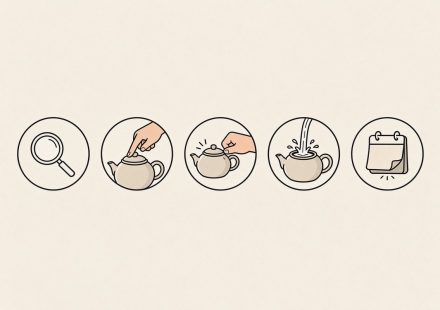
Reading Clay Texture: Sand Grain, Density, Speckles
Surface as evidence: grain, uniformity, sheen, natural specks versus printed patterns, and interior tool marks.
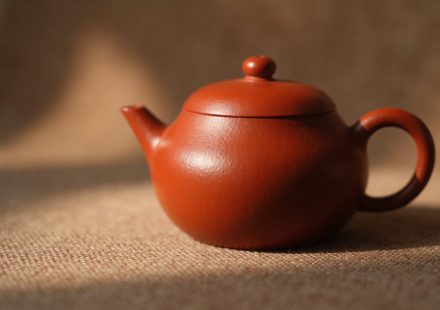
What “Zhuni” Really Means, and Why the Word Is Overused
High-iron, high-shrinkage red clay — and the slip-and-tint versions sold under the same name. Four checks that carry weight.
The Main Zisha Clays: Zijin, Zhuni, Duan and Qingni
Four branch names do most of the work in the trade. What each is, how it fires, and how to tell them apart by sound, grain and weight.