Why Yixing Pots Are Small: The Logic of Gongfu Brewing
Why a 120 ml pot is normal and a 1 litre pot is not
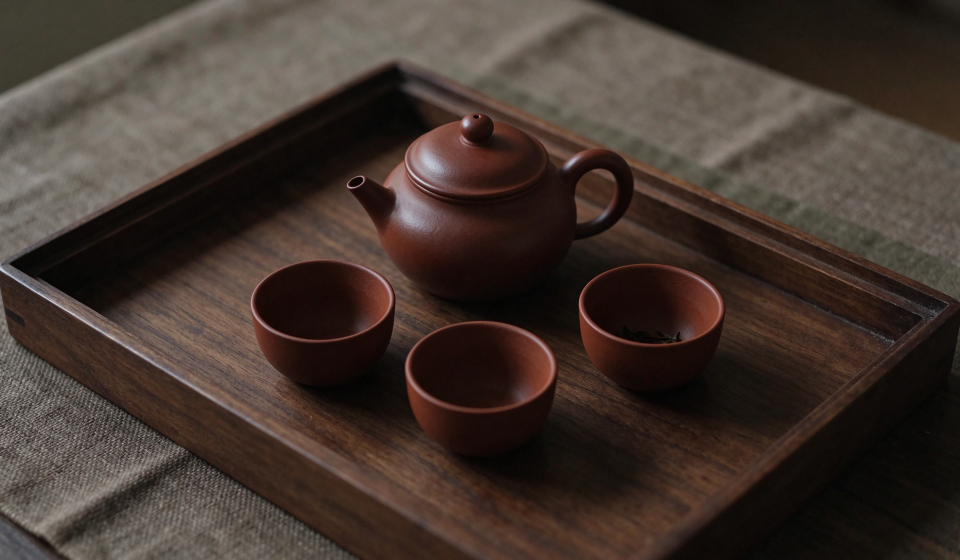
Walk into any tea shop in China and the Yixing pots on the table are small — most between 80 and 200 ml, many around 100–120 ml. To a Western drinker used to a 500 ml Brown Betty this looks like a doll’s teapot. It is not a decorative custom; the size is a direct consequence of how the tea is brewed.
The logic of many short infusions
Gongfu brewing uses a high ratio of leaf to water and a short steep: typically 5–8 g of leaf to 100–120 ml, infused for 10–30 seconds, then poured off and repeated many times. The same leaf may give six to fifteen infusions. Small volume does three things at once:
- Control. With little water, a few seconds more or less actually changes the result. With a litre, a ten-second error is nothing.
- Concentration. A high leaf-to-water ratio in a small pot produces a strong, layered infusion that can be diluted in a fairness pitcher if needed, rather than a weak large pot that cannot be fixed.
- Heat stability. A small pot full of water holds its temperature better than a large one, relative to its surface area, so the second and third steep start near the temperature you intended.
What size for what
There is no rule, but the usual bands are practical:
- 60–90 ml: solo drinking, tasting sessions, very high leaf ratios, or intense teas such as aged pu-erh and roasted oolong.
- 100–150 ml: the everyday default, two to four people sharing small cups.
- 150–250 ml: larger groups, or drinkers who prefer longer steeps and fewer of them.
- Over 300 ml: unusual in zisha. At this size the pot behaves more like a Western teapot and the gongfu logic breaks down; porcelain or glass is usually the better choice.
Small pots and pouring
At small volumes the pour becomes part of the design. A pot that dribbles for two seconds at 500 ml is merely annoying; at 100 ml, with 6 g of leaf in it, that two seconds is a measurable part of the infusion. This is why experienced buyers test the pour before anything else: fill with water, tip steadily, and watch for a clean stream that stops when the pot is righted, without running down the spout.
Spout geometry decides this. A short, slightly tapered spout with a clean lip pours well; a long, thin spout with a poorly finished tip tends to drip. Lid fit matters too: a lid that wobbles under pressure will leak at the rim while you pour, and a lid that is too tight will be hard to lift when the pot is hot.
Practical guidance for households
If two people drink together most days, buy 120–150 ml. If you mostly drink alone and like strong tea, 90–110 ml. If you entertain, keep a second, larger pot of 200–250 ml rather than forcing one pot to do both jobs — a pot used at two very different volumes and leaf ratios never settles into a routine.
Finally, ignore nominal capacity claims. Sellers quote the water volume to the brim, which is not usable volume. A pot listed as 150 ml may hold 120 ml at a sensible fill line, and the practical difference between a “150 ml” and a “120 ml” pot is often smaller than the difference between two pots of the same claimed size from different workshops.