A Short History of Zisha, from Ming to Now
Five centuries in one clay seam
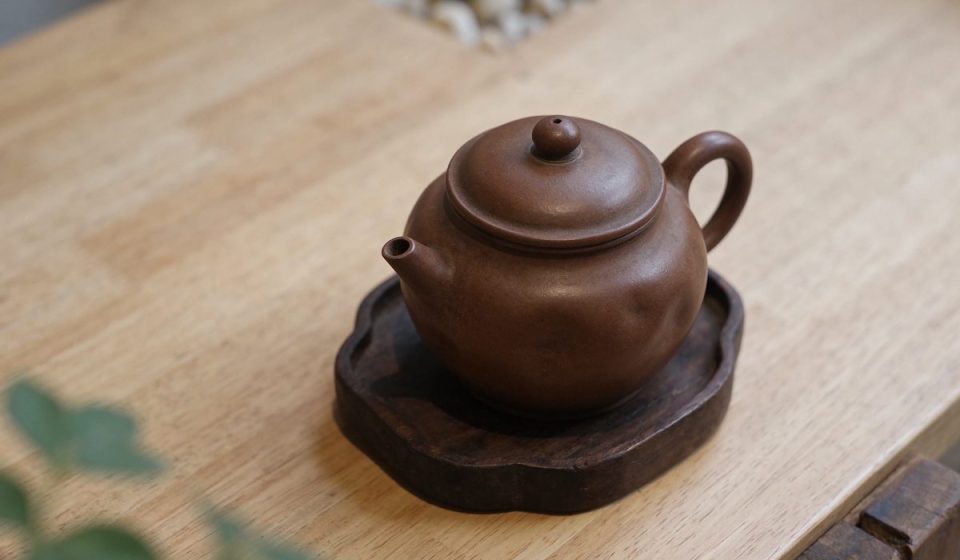
Yixing teapots are not ancient in the way Chinese porcelain is. The material became a serious craft in the middle of the Ming dynasty, around the early sixteenth century, when potters in Dingshu began working the local stoneware clay into small, unglazed pots for brewing loose leaf. Everything before that is prehistory; everything after is the story of a technique spreading, refining and occasionally being copied badly.
The Ming: from a spring to a canon
The founding figure in the trade’s own account is Gongchun, a servant at a monastery who is said to have noticed clay being dug out of a spring and used it to make a pot. Whether the story is literally true matters less than what it records: the material was in use, and its first products were plain, small and made for people who actually brewed tea.
The technical breakthrough came with Shi Dabin in the late Ming. Before him, pots were largely built by hand-pressing slabs. He and his generation developed the hammered and wheel-assisted methods that allowed thinner, more precise walls, tighter lids, and the geometric control visible in the classic shapes. Much of what a modern potter learns as “the traditional way” traces to that period.
By the late Ming, zisha was already a luxury object with a collector market. Pots were commissioned, inscribed, and traded far beyond Jiangsu — the earliest evidence that the material’s appeal was not only practical.
The Qing: nature into clay
The eighteenth century brought Chen Mingyuan, whose work pushed the material toward sculpture: pots shaped as nuts, bamboo, lotus pods, tree stumps. This is the source of the “naturalistic” or floral branch of the shape canon, and it established an idea that persists today — that a teapot can be a piece of sculpture that also functions.
At the same time the literati relationship deepened. Scholars commissioned pots, wrote inscriptions, and had poems or seals carved into the body. A pot became a small, usable object carrying text — a form that Chinese collectors still value above purely decorative work.
Export: when Yixing reached Europe
From the seventeenth century, Yixing pots travelled with the European trading companies. Dutch, English and French buyers called them boccaro or “red porcelain”, treated them as luxury curiosities, and had them mounted in silver gilt. They influenced European stoneware directly: the red stoneware of Delft and of Staffordshire potters in the seventeenth and eighteenth centuries was an attempt to imitate a material nobody in Europe could source.
This export history explains an oddity collectors still meet: genuine Yixing pots in European silver mounts. The mounts were added by importers, not by Chinese workshops.
The twentieth century: factory, then revival
After 1949 the craft was reorganised into state-run factories, with standardised shapes, numbered moulds, and a quality ladder that made pots reproducible. Much of what is sold today as “old factory” work comes from this period, and its uniformity is the point: these were production pots made to a specification.
From the 1980s, private workshops re-emerged, and by the 1990s and 2000s the collector market revived with force. A ranking system of titles for living potters — provincial, national, master — became a pricing instrument, and auctions began to record sums that made the material interesting to investors as well as drinkers.
Today
Zisha is now a protected heritage craft, taught through apprenticeships and a small number of academies, and simultaneously a global commodity sold online with highly variable quality. Mining is restricted, ore is stockpiled and blended, and the words “old mine” and “handmade” are used loosely. The craft itself is in reasonable health; the information around it is not.
For a buyer, the useful lesson from this history is that zisha has always been two things at once — a working vessel and a collectable — and the two markets have never been priced the same way. Decide which one you are buying into before you look at the seal.