Clay Premium: When Rare Clay Is Worth Paying For
Why some clay costs more per kilo
Clay price is set by scarcity, difficulty and demand, and all three interact. A mine that is exhausted or closed cannot supply more; a clay that cracks at a high rate raises the effective cost of every finished pot; a clay that photographs beautifully raises demand among buyers who will never touch it.
The clays that carry a premium
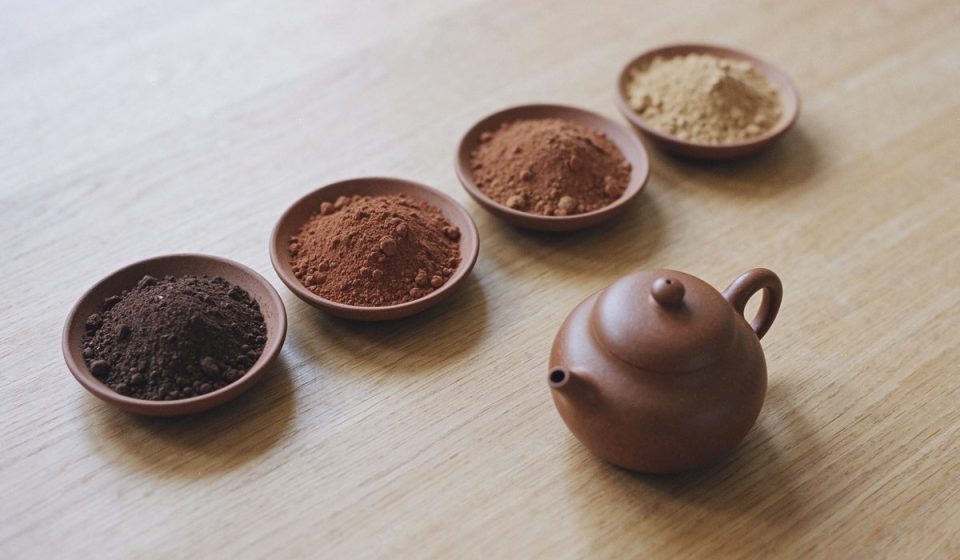
- Zhuni. Scarce, high shrinkage, high failure, distinctive warm red-orange after firing. Genuine zhuni is rare enough that most “zhuni” on the market is something else.
- Certain duanni grades. Coarse, mineral-rich bodies with unusual colour effects; some grades are effectively depleted.
- Old stock. Clay dug decades ago and stored, aged and worked. Ageing changes workability, and old stock is finite.
- Small-lot specials. Clay from a single seam or a single firing batch, sold with the story attached.
What is not a premium
“Purple clay” as a generic label carries no premium; zini is the common material. Colour names — “tianqing”, “dicaoqing”, “benshan green” — describe appearance and origin claims, and the label is often applied to whatever the seller has. A deep, even, saturated colour on a cheap pot usually indicates a coating or a blend, not rarity.
How to test a clay claim without a lab
- Weight and density. A rare, iron-rich body feels substantial for its size.
- Colour behaviour. Rotate the pot under a light: a real clay shifts tone with grain and mineral speck visible. A coated pot reads flat.
- Interior. Check the unreachable places — the base ring’s inner face, the lid seat, the wall behind the spout. Coatings cannot be applied evenly there.
- Break or chip. Where a pot is already chipped, look at the exposed body: a coated pot shows a lighter core.
The economics of “rare clay” claims
If a clay is genuinely scarce, its price is set by people who can verify it — established makers, dealers with long relationships, collectors who know the material. A stranger selling a “rare zhuni” pot at a modest price is either misinformed or selling something else. Both are reasons to decline.
Where the premium is worth paying
Clay premium is worth it when you can see and feel the difference: unusual grain, a colour that behaves, a body that brews the way you like. It is not worth it when the only evidence is a label and a story. The premium for a documented, old, difficult clay is real and durable; the premium for a word on a listing is not.
A practical stance
Buy clay you can verify by touch and sight at a price you can justify by function. Treat rarity claims as entertainment unless you have independent evidence. This stance will cost you nothing and will save you a great deal.