Studio Pots vs Signed Pots: What the Difference Costs
The tier that nobody tells you about
When a shop says “this pot is by Master X”, the sentence can mean at least three different things, and the price difference between them is large. Yixing’s studios are not solo ateliers; they are workshops with a head, senior staff and apprentices, and the head’s name and seal can legitimately attach to work at several levels.
Tier one: made by the master
The named person formed the body, set the spout and handle, finished the pot and stamped it. Output is small — dozens a year for most ranked potters — and prices sit at the top of the workshop’s range. This is the only tier that a collector means by “a pot by X”.
Tier two: studio work to the master’s design
Shapes and standards are set by the head; senior assistants do the forming and finishing under supervision; the studio seal is applied. Quality is usually high and consistent, because the workshop’s reputation depends on it. Prices are a fraction of tier one but well above anonymous production. Much of what is sold as “the master’s workshop” is this, honestly described.
Tier three: work made under the studio name
Apprentices and staff produce standard shapes in quantity; the studio mark appears on the box or the certificate rather than in the base seal. These are competent working pots. They are not collector pieces, and they should not be priced as such.
The question that separates them
Ask directly: “Did the named potter make this pot, or did the studio make it to their design?” Then ask for evidence: the year of production, the workshop, whether there is a photograph or record of the named potter with the pot, and whether the certificate names the individual or the studio.
A clear answer — including “this one is studio work, the master only signs the top tier” — is a strong signal of an honest seller. Vague answers that circle back to the seal are a signal of the opposite.
Why the ambiguity persists
Because it is profitable, and because it is culturally tolerated. In the Chinese market, “author’s work” (作者作品) and “studio work” (工房作品) are understood categories, and buyers who know the trade ask about them routinely. The ambiguity grows in export markets, where translation collapses the distinction and a certificate with a famous name becomes the whole story.
Legally, none of this is fraud when the tier is disclosed. It becomes misrepresentation when a studio pot is sold at a master’s personal-work price with a seal-only justification.
What to do with this
- Decide which tier you want before you shop. Tier two is usually the sweet spot for someone who wants excellent workmanship without collector pricing.
- Price each tier separately in your mind. A studio pot at a studio price is good value; the same pot at a master’s price is a mistake.
- Prefer sellers who volunteer the tier. It is the single most diagnostic sentence in a listing.
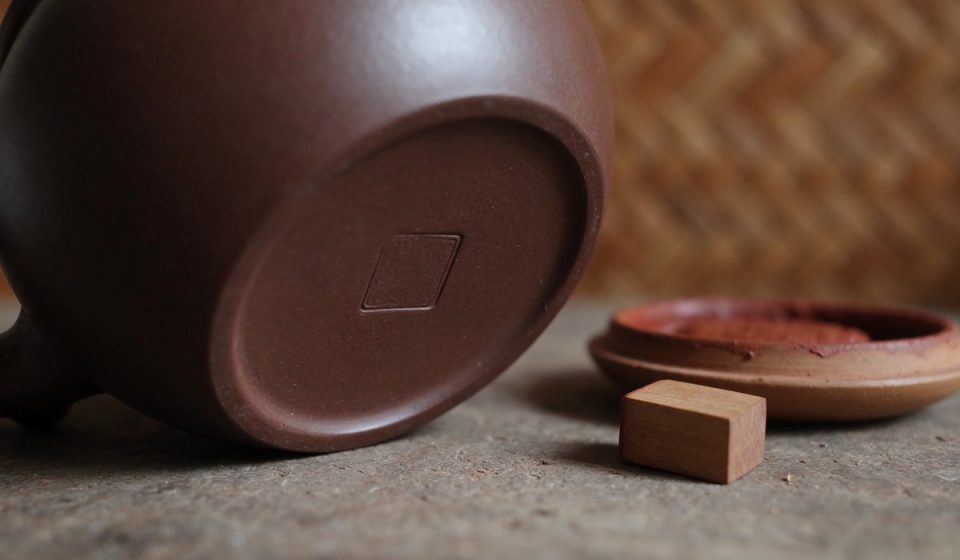
- Ignore the seal as evidence. All three tiers can carry the same mark; only documentation and workmanship distinguish them.
A note on how good studio work is
Tier two pots are often better than the personal work of less experienced makers, because the workshop’s senior staff may have decades of forming practice. If your goal is a pot that pours well and lasts, the studio tier is where most of the craft’s real value sits — which is precisely why sellers blur the tiers upward.