Size and Capacity: How Many Cups You Actually Need
The number sellers quote is not the number you use
Capacity is the first thing to get right and the easiest to get wrong. Listings quote the volume to the brim; you never fill a pot to the brim. With leaf in it and a lid on, a “150 ml” pot holds roughly 110–130 ml of water — and that is before you consider that you will not pour it bone dry.
How much tea one pot makes
Gongfu brewing uses small cups, typically 30–50 ml. A working capacity of 120 ml, poured into a fairness pitcher and then into cups, serves two to three people comfortably, or one person through a long session. The arithmetic is simple:
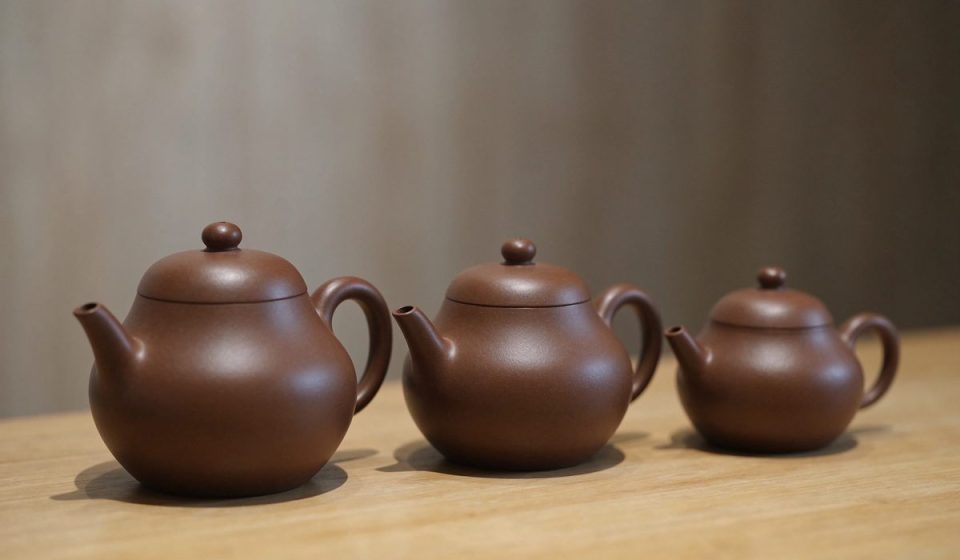
- 60–90 ml — 2–6 small cups; solo or tasting use; high leaf ratio.
- 100–150 ml — 4–8 small cups; the everyday default.
- 150–250 ml — larger groups, or drinkers who prefer fewer, longer steeps.
Why bigger is not more convenient
A large pot seems like it would save effort. In practice it does the opposite: more water means a slower temperature drop, a longer pour, and a steep that is harder to stop precisely. With 300 ml and a high leaf ratio, the last of the pour is already over-extracted relative to the first, so you end up with an inconsistent cup and a pot that no longer behaves like gongfu equipment.
If you regularly host four or more people, buy a 200–250 ml pot as a second pot rather than stretching a 300 ml one to do everything.
How to measure the real capacity
Fill the pot with water to a sensible level — just below the lid seat — and pour it into a measuring jug. That is your working capacity. Then repeat with a typical amount of leaf in the pot: the leaf displaces water, so the usable volume drops further, sometimes by 10–15% with a rolled oolong.
Do this before you buy if you can, or ask the seller for the measurement rather than the nominal figure. A seller who knows the working capacity is a seller who has actually used the pot.
Match the size to your tea
Leaf expansion matters as much as volume. Rolled oolong balls swell considerably; long strip leaves and compressed pu-erh chunks take up room differently. A 120 ml pot that is comfortable with black tea can be crowded with a high-ratio ball oolong. Where the body is narrow — Xishi, Duoqiu — the leaf stacks and blocks the filter; a wider body such as Fanggu handles expansion better.
A practical decision
If you drink alone most days and like strong tea, choose 90–110 ml. If you usually drink with one other person, 120–140 ml. If you host, add a larger second pot. And whatever you choose, remember that the difference between adjacent sizes is small: the shape and wall thickness will change your experience more than 20 ml of volume will.