Common Myths About Yixing Teapots, Checked
Eight claims worth checking
The internet’s zisha advice is a mixture of genuine craft knowledge and sales copy that has been repeated until it sounds like fact. Here are the claims you meet most often, and what is actually behind them.
1. “Zisha makes any tea taste better”
False as stated. A zisha pot slightly rounds aroma and holds heat; it does not improve bad leaf and actively harms green tea brewed cool. The material is a modifier, not an enhancer. Anyone promising that a pot will fix a tea is selling a pot, not tea.
2. “Once you use a pot for one tea you can never use it for another”
Overstated. The wall retains aromatics, so a pot dedicated to one tea family performs best. But a pot that has brewed roasted oolong for a month will not be destroyed by an occasional session of black tea — it will just taste slightly blended for a while. The strict rule matters for people chasing the last few percent, not for someone with one pot and three teas.
3. “Old pots are always better than new ones”
Neither true nor safe. Genuine pre-1980 pots exist and some are excellent; the vast majority of “old” pots on the market are new pots aged artificially with tea stain or shoe polish. Meanwhile the best modern workshops make pots that early factory production could not match in fit and finish. Age is a provenance question, not a quality guarantee.
4. “Purple clay makes purple pots”
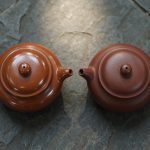
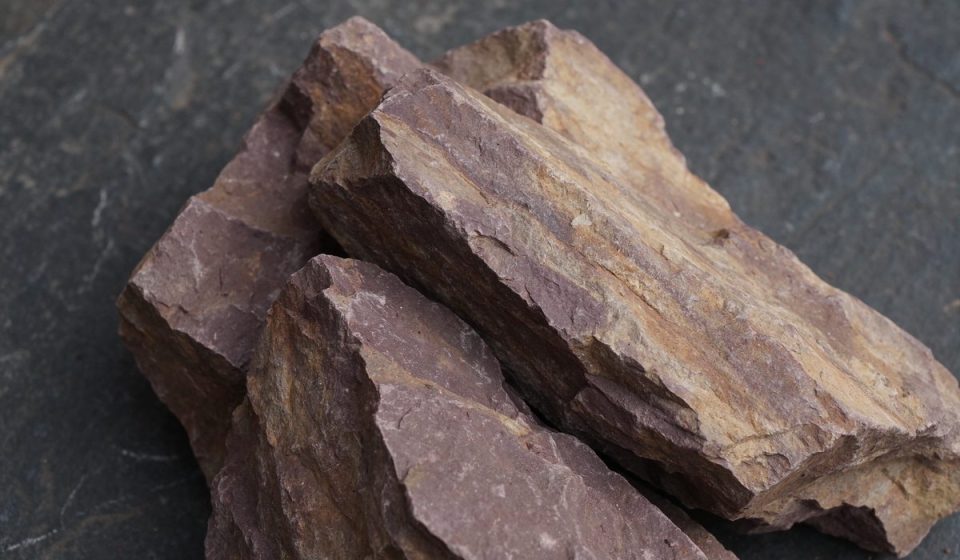
The colour comes from iron oxide plus kiln atmosphere. Zijin (“purple mud”) usually fires to a brown-red; zhuni fires red-orange and shrinks dramatically; duan fires yellow-tan; reducing atmospheres can push surfaces toward grey or blue. A pot whose colour is flat, even and unrelated to the clay is usually a coloured slip over a cheap body.
5. “Handmade means every part is shaped by hand”
The trade distinguishes fully handmade (quan shou gong) from half handmade (ban shou gong), where the body is formed in a mould and finished by hand. Both are legitimate; half-handmade pots are cheaper and often perfectly good. The dishonest move is calling a moulded pot fully handmade, and the tell is uniformity: dozens of identical pots with identical walls.
6. “A famous seal means a famous maker”
Seals are the most copied element in the craft. A seal takes a mould and five minutes; a pot takes days. Treat the seal as one weak clue among many, and weight it far below the workmanship evidence — tool marks inside, joint quality, lid fit, pour, and wall consistency.
7. “You must boil the pot to season it”
Boiling a new pot in a saucepan is popular online and does little except risk thermal shock and crack a pot you just bought. The reasonable version: rinse with warm water, brew the intended tea several times, discard those infusions, then just use it. The pot seasons through use, not through a ritual.
8. “Zisha contains lead and is unsafe”
Zisha is unglazed, so the usual lead risk from ceramic glazes does not apply to the body. Problems arise in three cases: coloured slips or decorative glazes applied over poor clay, cheap pots from unknown sources with metallic paint on the surface, and repairs using improper fillers. Buy from sellers who will show you the raw surface, and avoid anything shiny, painted or suspiciously cheap with a “hand-painted” claim.
How to use this list
Do not replace one slogan with another. When you evaluate a pot, ask what you can verify in your own hands: how it pours, how the lid sits, what the inside looks like, how heavy it is, whether the colour behaves like clay. Those five observations will outvote any story about a mine, a dynasty or a title.