Buying for a Tea House or a Shop
Buying for a tea house or a shop
Volume buying for a business changes the logic. You need consistency, durability, and a price that survives breakage, not one exquisite object. The pots will be handled by staff and customers, washed many times a day, and possibly knocked against each other.
What to specify
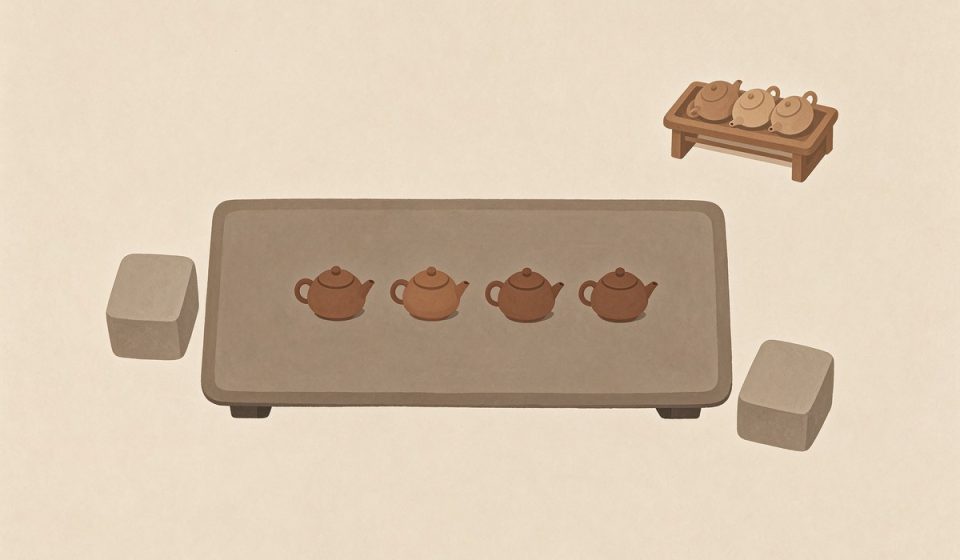
- One model, repeated. Same shape, capacity and clay for all brewing stations; consistency is more valuable than variety.
- Capacity matched to the service. A 120 ml pot for individual service, 180–250 ml for shared tables — decide by how your staff pours.
- Fast, reliable pour. Your staff will not have time to coax a slow spout during a rush.
- Thick enough walls. Thin walls brew better and break more often; for a commercial setting, a slightly thicker wall is the correct trade.
- Plain surfaces. Decorated pots are harder to clean and show damage sooner.
What to accept about wear
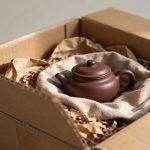
Commercial pots will chip, and some will break. Budget for replacements as a running cost rather than treating breakage as a failure of the supplier. Ordering in lots that include spares — one in ten, for example — keeps the station running.
Sample before you buy in volume
- Buy three sample pots from the intended supplier.
- Brew with them for a week at real service pace.
- Wash them twenty times and check for chipping at the rim and lid.
- Time the pour with a full pot at the angle your staff actually use.
- Only then place the order, with a written specification attached.
The written specification
Put it in the purchase order: capacity range, clay family, forming method, unglazed interior, no decoration, pour must not dribble, tolerance for a small number of seconds at the rim. Clear specifications prevent the substitution of cheaper pots halfway through an order.
Cleaning at volume
Commercial washing with detergent is the single biggest destroyer of zisha. If your operation must wash in a machine, use porcelain or glazed ware for service and keep zisha for a limited, hand-washed station. Detergent in the pores will make every subsequent pot of tea taste of soap.
Staff training pays for itself
Two habits save most of the breakage: preheat every pot before service, and never tap the spout to clear the last drops. A five-minute briefing at the start of a season is cheaper than a replacement order.
The economics
Volume pricing reduces unit cost, but the real savings come from consistency and spares. A station where every pot behaves the same way is faster to run, and that is worth more than the discount.