The Masters of the Republic Era
The generation that carried the craft into the modern market
In the mid-twentieth century, Yixing’s craft was reorganised around state-run factory production, and a small group of potters working through that period became the reference generation for everything that came after. The names usually grouped together as the “seven masters of the Republic era” — including Gu Jingzhou, Jiang Rong, Zhu Kexin, Pei Shimin, Ren Ganting, Wu Yungen and Wang Yinchun — are the people whose work defines the transition from workshop practice to collectable art.
Their significance is not only in the pots. They trained the next generation, established the shapes now considered canonical, and were the first group whose work was priced as art rather than as tableware.
What each is known for
- Gu Jingzhou — precision of plain form; the reference standard for proportion and finish, and the name that anchors the top of the market.
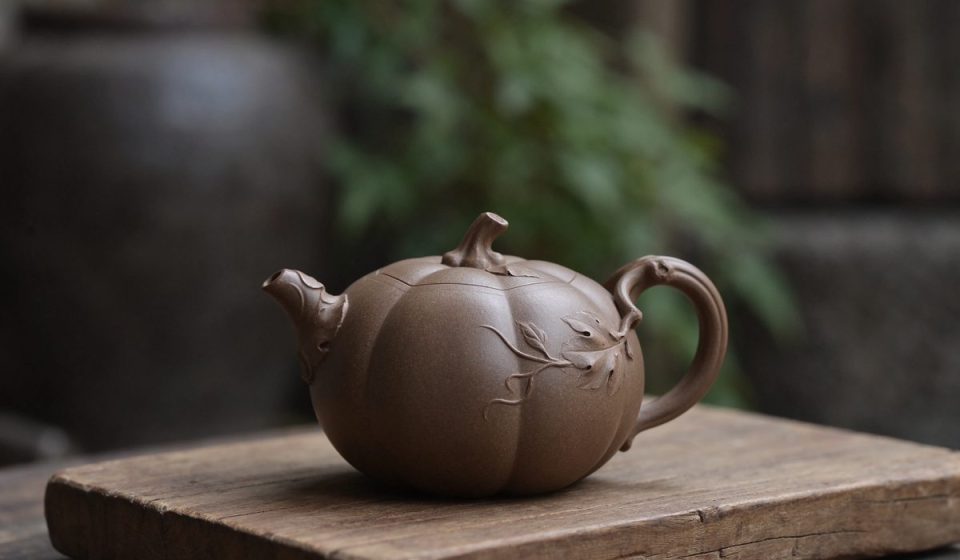
- Jiang Rong — naturalistic work, especially floral and fruit forms, executed with unusual technical control.
- Zhu Kexin — naturalistic and animal forms; a bridge between sculptural ambition and functional pots.
- Pei Shimin — refined plain and small forms, with an emphasis on elegance of line.
- Ren Ganting — carving and inscription; the literati side of the craft rather than the body.
- Wu Yungen and Wang Yinchun — technical range, including square and ribbed work, and the training of later masters.
Why their work is hard to buy — and easy to fake
Almost all of it is in museums, in long-held private collections, or in auction records. What circulates under their names is overwhelmingly either studio work made later under inherited marks, or outright reproduction. The price level of genuine pieces means that any “bargain” is, by definition, not one.
The case for caution is reinforced by the era itself: factory production in the 1950s to 1970s used numbered moulds and standard shapes, so there are many legitimate “old factory” pots that look similar to master work and are not it. An old factory pot is a real, interesting object; it is simply a different category.
What a buyer can actually learn from this generation
Three useful things. First, proportion: their best plain pots show what a correct shoulder, foot and spout look like, and modern photographs of them are an excellent study resource. Second, finish discipline: lid fit, rim level, pour quality — the standards they set are the standards you should apply to a $200 pot today. Third, the tier system: the studio structure that grew around these names (personal work, studio work, apprentice work) is still how the trade operates, and it explains most of what a famous seal actually means.
A sane position on their work
Treat this generation as a reference library, not a shopping list. Study photographs of their shapes; apply their standards when judging a modern pot; and when someone offers you their work at a price you can afford, assume the story is wrong until documented provenance says otherwise. That assumption costs nothing and protects everything.