Jinglan, the Well Railing: A Pot Built from Straight Lines
The pot that looks like a well
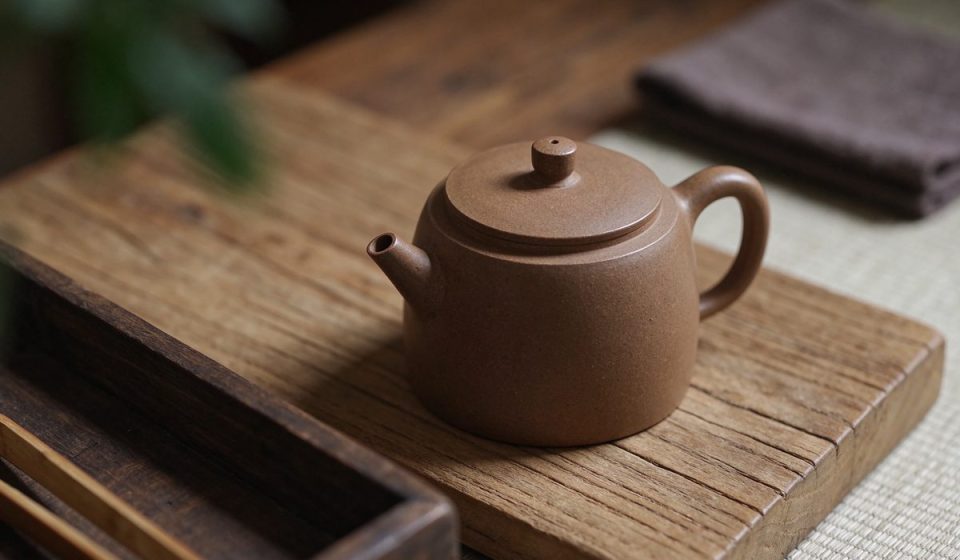
Jinglan (井栏, “well railing”) is a straight-sided cylindrical form with a flat top and a lid that sits inside the rim. The name refers to the low wooden or stone railing around an old well; the shape imitates that simple solid drum, and its appeal is entirely architectural: vertical sides, a horizontal shoulder, and nothing else.
Why straight lines are harder than curves
A cylinder looks like the easiest form in ceramics. It is actually one of the most demanding. A curve hides small irregularities; a straight wall does not. Any wobble in the wall, any unevenness in the rim, any difference in wall thickness from one side to another is visible at a glance, especially under raking light.
This is also why so many cheap pots are cast: casting gives you a perfectly straight cylinder. The catch is that it also gives you a perfectly featureless interior, and the surface tends to look glassy rather than grainy.
Details that identify a good Jinglan
- Wall: plumb and even, with thickness roughly constant from rim to base. Tilt the pot: the wall should not taper.
- Rim: dead level, thick enough to hold the lid without a wobble. A thin rim chips easily.
- Lid: sits inside the rim, flush or slightly recessed, with a flat knob or a small bridge. It should drop in without rocking.
- Spout: a short straight tube emerging from the wall without an obvious bulge at the joint; the transition should look like it grew there.
- Base: a slight spreading foot, usually straight, so the pot does not look like a cut pipe standing on end.
Player and lighting
Because the form is all planes and lines, it is unusually sensitive to finish. A good Jinglan has a matte, slightly sandy surface that diffuses light; a cheap one reflects light in a flat, even sheen. Photograph it with a single directional light and the difference is immediate.
Look also at the junction between the spout and the wall. On a well-made pot it is a clean, slightly thickened circle with no crack line; on a poor one there is a visible ring or a shadow gap where a separately cast spout was inserted into a hole.
Firing and warping
A straight-walled cylinder is prone to slumping in the kiln. Good workshops support the wall during firing or fire the pot upside down with a setters’ arrangement that holds the rim true. A pot whose rim is visibly oval, or whose base rocks on a flat table, has lost that fight. Test it: set the pot on glass and press gently — any movement is a defect.
How it brews
The straight wall and flat bottom make it easy to clean, and the cylindrical body holds heat well without an excessive surface area. It is a comfortable pot for oolong and black tea, and its simple interior suits drinkers who rinse rather than scrub. Because the body is tall relative to its width, leaf tends to stack rather than spread, so it suits teas that do not expand dramatically.
Typical capacities are 120–200 ml. The shape reads better at the larger end — small Jinglan pots can look like cups with a spout.
Who should buy it
Anyone who likes restrained design and dislikes ornament. It is also the shape to choose if you want to learn to see craftsmanship: with no curve to distract you, a Jinglan shows you exactly how good the potter was.