The Qing Period: Thin Walls and the Refined Standard
The period of refinement
The Qing period, particularly the seventeenth and eighteenth centuries, is when zisha reached the level of technical finish and design range that modern pot making still measures itself against. Bodies became thinner, lids tighter, and the vocabulary of shapes vastly expanded.
What changed
- Thinner walls. Qing pots were built down to a fraction of the Ming thickness, with corresponding gains in heat response and weight.
- Smaller pots. As brewing practice changed toward higher leaf ratios and shorter infusions, capacity fell.
- Design vocabulary. Shapes inspired by fruit, flowers, bamboo, bronze vessels and architectural forms became common, along with bodies that combined several elements.
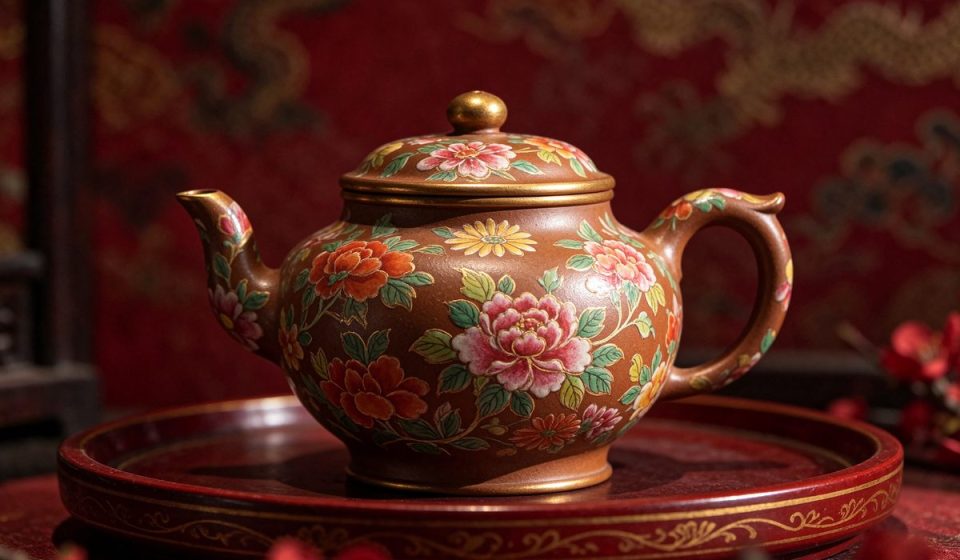
- Decoration. Incised calligraphy, painted enamel, appliqué and inlay appeared, some of it executed outside Yixing by enamel workshops.
- Imperial attention. Palace workshops commissioned and imitated zisha, raising its status and its market reach.
The names
Qing writing is rich in named makers and named styles, and this is also when the practice of signing became near-universal. A seal on the base, a mark on the lid, sometimes a signature incised on the body — the conventions that modern pots follow were fixed in this period.
What to look for physically
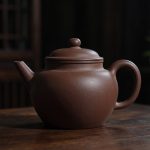
Genuine Qing pots show high-quality clay with visible grain, thin and even walls, a lid that fits perfectly and still lifts easily, hand-built interiors with pronounced wheel lines, and controlled but not glassy firing. Repairs are common and expected.
The warning signs of a “Qing” pot that is not one: thick walls, mechanically even interiors, a printed seal, or decoration applied with modern materials.
The decorative branch, and its trap
Enamelled and painted zisha made for export and for the palace is a distinct category with its own collector market. It is also the easiest category to fake, because added decoration hides the body. A pot whose body is covered in enamel tells you much less about its clay, so price it as decoration unless you have documentation.
The practical takeaway
Qing is the reference point for what good workmanship looks like: thin walls, true lids, restrained shape, honest materials. Most of the standards used to judge a new pot today were set in that period, which is why potters still talk about proportions that were settled three hundred years ago.
And the caveat
Period names are marketing categories as much as historical ones. A pot described as “in the Qing style” is a modern pot. The distinction is not pedantry; it is the difference between an object priced as an antique and one priced as a good copy.