The Ming Period: When the Object Was Invented
The century that invented the object
Zisha teapots as a recognised craft form emerged in the Ming period, roughly the sixteenth century, and were established by the seventeenth. The shift that made it possible was in tea itself: leaf tea steeped in water replaced powdered tea whisked in a bowl, and steeping created the need for a vessel that could hold hot water, hold heat, and be poured repeatedly.
Early forms
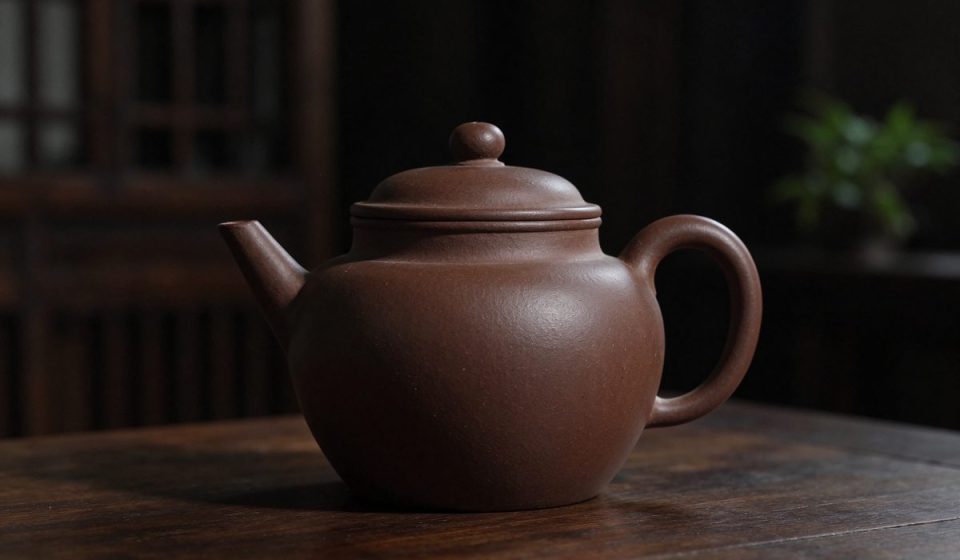
Ming pots are typically large by modern standards, thick-walled, with generous bodies and simple profiles. They were household objects used with big leaf quantities, not the small gongfu pots of later centuries. Shapes were derived from jars, from bronze vessels, and from geometry — circles, squares, and forms named after objects and animals.
Making methods
- Built bodies. Slabs and coils on a wheel head, paddled and ribbed into shape — the method that survives today in fully handmade pots.
- Hand-fitted lids. Cut to the body, ground in place, tested by lifting with a fingertip.
- Simple tools. Bamboo, wood, bone; the wheel was hand-turned or treadle-driven.
The first named makers
Ming writing names pot makers and describes their work in terms of proportion, thinness and finish. This is when individual authorship becomes a market fact: a named pot commanded a premium over an anonymous one four centuries ago, for the same reasons it does now.
What survives, and what does not
Very little Ming zisha survives, and much of what is claimed as Ming is later. The physical evidence to look for is simple: thick walls, large capacity, coarse and often uneven clay, hand-built interiors, lids that are fitted rather than machined, and firing marks from wood kilns. Surface colour is uneven, because kilns were not controlled.
What Ming pots tell us about the craft
They establish the pattern that persists: material first, then form, then the fit of the lid, then the pour. They also establish the commercial structure — named workshops, a market, and imitations. Reading Ming pots is reading the origin of both the craft and its counterfeits.
Why this matters to a buyer today
Not because you will buy a Ming pot. Because understanding the earliest form clarifies what a zisha pot fundamentally is: a thin, unglazed, hand-built vessel optimised for steeping. Any pot that works well today is working within that inheritance, and any pot that fails those basics is not.