Building Real Patina: Months, Not Hours
What accumulates, and how fast
Patina in zisha is tea liquor, steam and hand oils filling the open pores of the wall and slowly oxidising on the surface. It is not a coating and it is not polish. It builds in months, and it changes character over years.
- First month: the surface loses its dry, chalky look and gains a faint sheen. Colour deepens unevenly.
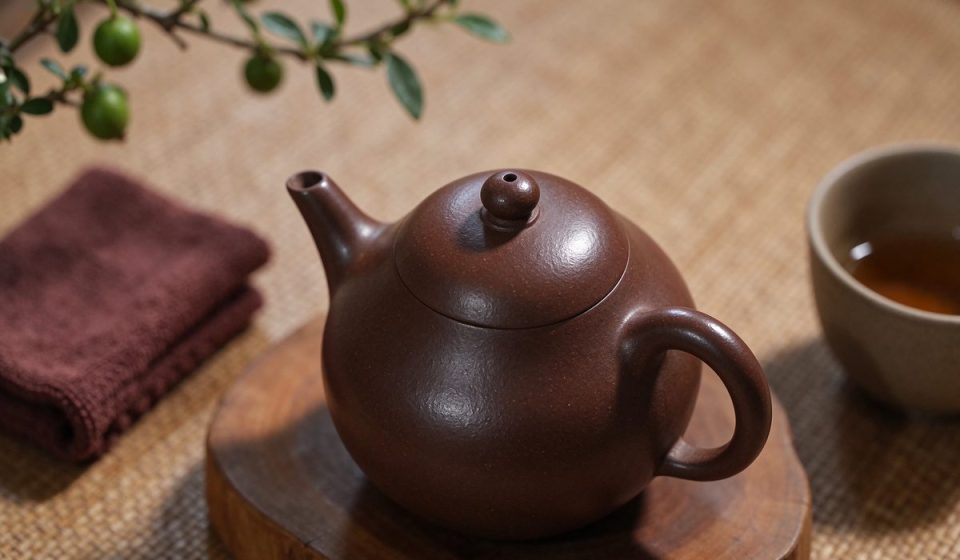
- Three to six months of regular use with one tea: a visible, coherent darkening, strongest at the rim and shoulder, soft and deep rather than glossy.
- One to three years: a wet-looking depth that survives drying, with grain still visible beneath it.
The method, which is mostly restraint
- One tea family per pot. Coherent patina comes from a single colour direction.
- Brew regularly. Frequency matters more than volume. Daily small sessions beat occasional marathon ones.
- Wipe warm. After pouring, wipe the outside with a soft damp cloth while the pot is still hot. This distributes liquor evenly and prevents the blotchy look of neglect.
- Rinse the interior with hot water and empty it; do not scrub.
- Dry open. Patina sets when the pot dries properly, not when it stays wet.
- Rest periodically. A week off every few months lets the surface consolidate.
What not to do
- Do not boil the pot in tea to hurry things along. It produces streaky, flat, uneven colour that cannot be undone.
- Do not rub oil or wax. It gives an immediate shine with no depth, fills the grain, and attracts dust.
- Do not scrub the outside. Every hard scrub removes a layer.
- Do not brew many teas in one pot. The colour goes muddy and the aroma muddled.
- Do not chase the look of an old pot. An honestly seasoned one-year pot looks better than a dishonestly aged ten-year one, and it keeps improving.
Patina and clay type
Zhuni and fine-grained clays take on a deep, glossy-within-matte look relatively quickly. Duanni and coarser bodies show patina more slowly, and their grain stays visible, which many collectors prefer. A pot with a heavy sand content can take years to look seasoned; that is not a defect.
The “one pot, one tea” question again
If you want variety without muddling, use several small pots rather than one large one. This is both the traditional arrangement and the practical one: two 120 ml pots cost less than one 250 ml pot and give you two coherent patinas instead of one confused one.
What patina is not
It is not a value multiplier, and it is not proof of anything. It cannot be verified, it can be simulated, and on a pot you bought it tells you about its previous owner rather than about the clay. Buy for material, construction and pour; the patina is what you get for using the pot well, and it is the part of the hobby that cannot be bought.