Between Brews: Drying, Storage and Travel
Drying is the whole job
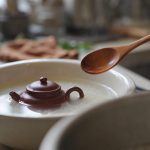
Between sessions, the only thing that really matters is that the pot dries completely, inside and out, before it is stored with the lid on or put away for a season. A pot that stays damp loses the thing you bought it for: a clean interior that carries one tea’s aroma.
The standard sequence
- Empty the leaf into a bowl, not the bin — wet leaf in a bag becomes mould.
- Rinse with hot water, swirl, discard. No cloth inside; the cloth just redistributes oils.
- Shake out the water, invert the pot on a dry cloth for a few minutes.
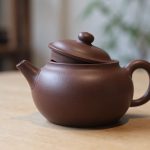
- Set it upright, lid off and lid beside it, in moving air — not in a closed cupboard.
- Leave overnight, or until the interior feels dry and cool to a fingertip.
Only then reseat the lid.
Where to store it
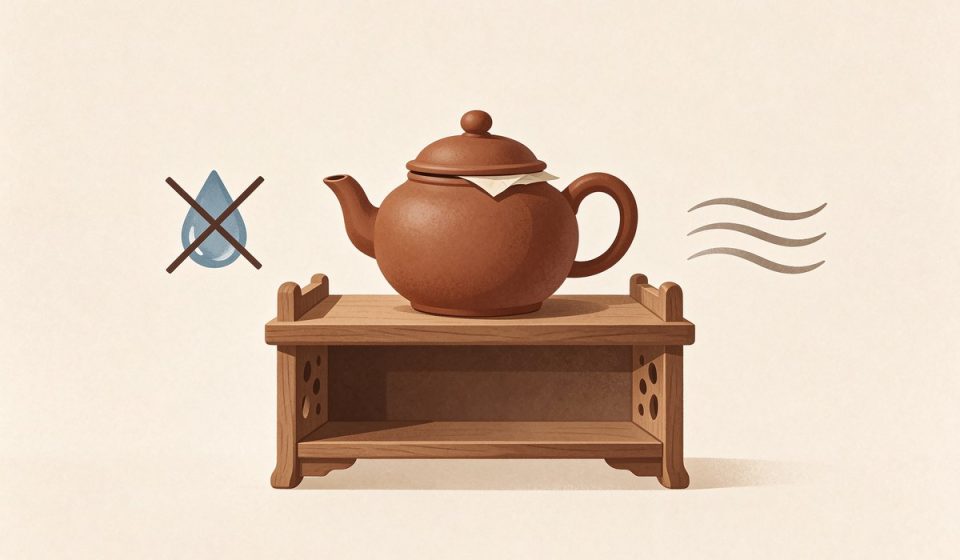
- Air, not airtight. A sealed plastic box traps humidity. Zisha needs to breathe; a wooden shelf or an open cabinet is better than a case.
- Out of direct sun. Long sun exposure on a damp pot can produce uneven colour.
- Away from strong smells. The same porosity that makes the pot season also means it will pick up the scent of a spice drawer or a scented sachet.
- Lid off for long storage. After a week of use, a one- or two-week rest with the lid off lets the interior dry right through.
Travel
For a journey, wrap the pot in soft cloth inside a rigid box, lid separately wrapped, and do not travel with it damp. A pot packed wet for a day arrives with a smell that takes weeks to clear. On arrival, unpack it and let it air before brewing.
Storing different pots together
If several pots share a shelf, keep them apart enough that lids do not knock, and do not store a strongly seasoned pot tight against a new one — the new one will pick up the neighbour’s tea. A cloth bag per pot solves both problems.
The seasonal question
In a humid climate, a pot stored for months without use is a mould risk. Before a long storage, dry it thoroughly, leave the lid off, and check it once in a while. If you live somewhere with high summer humidity, store pots in a dry room rather than a cellar, and consider a small desiccant nearby — in the room, not inside the pot.
What “dry” means in practice
Not merely “no standing water”. Feel the interior floor with a fingertip; it should be cool and non-tacky. Look at the base ring; a damp pot shows a slightly darker band there long after the visible water has gone. If either is present, leave it another day.