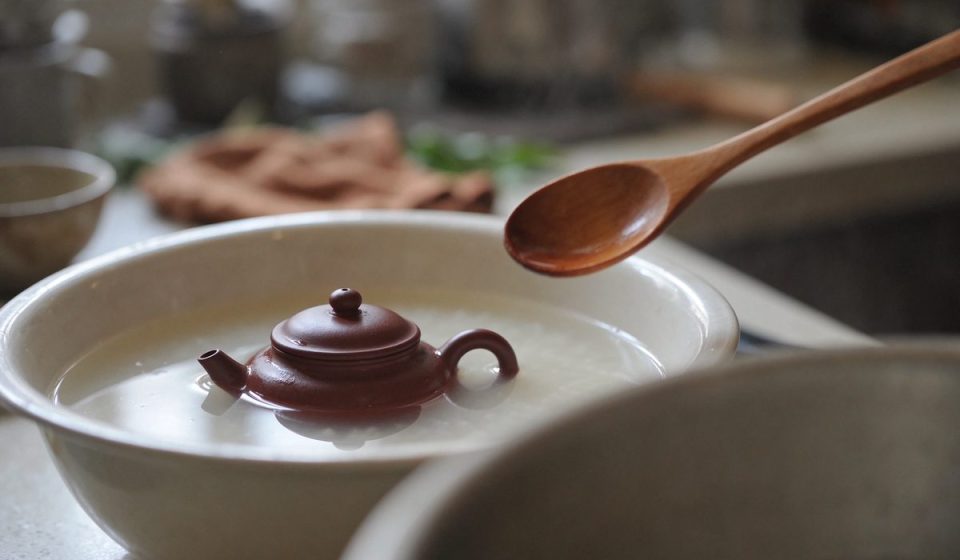
Seasoning a New Pot: The Mistakes That Do the Damage
Why the first week matters more than any other
A new pot has just left a kiln at over 1,000 °C. It is dry, slightly chalky at the surface, and it has never held water. The first cleaning is meant to do two things: remove kiln dust and any residue from the workshop, and begin the pot’s life without damaging it. Most damage to new pots happens in this week, and almost all of it comes from doing too much.
Mistake 1: boiling it in a metal saucepan
The popular instruction is to simmer a new pot in water, sometimes with tea leaves, for an hour. Two problems. A metal pan transmits heat unevenly, and the pot rattles against a hard surface. Use a stainless or enamel pan with a cloth underneath if you must simmer at all, keep the pot fully submerged, heat slowly, and let it cool in the water — never transfer it hot.
Mistake 2: going from hot to cold
Zisha is porous and not particularly shock-resistant. Pouring cold water into a hot pot, or running a hot pot under the tap, can crack it along the rim or the base ring. The rule is simple: change temperature slowly, in both directions.
Mistake 3: long boils with strong tea
Boiling a new pot in concentrated tea for several hours does not accelerate patina. It fills the pores with tannin unevenly and leaves a dark, streaky surface that looks artificial and cannot be undone. The purpose of a first wash is cleaning, not colouring.
Mistake 4: scrubbing the surface
New pots sometimes arrive with a whitish bloom — kiln dust or a light efflorescence from soluble salts. This is normal and disappears with hot water and a soft brush. It does not require abrasive powder, and abrasive powder will take the grain off permanently.
Mistake 5: sealing the lid while wet
A pot put away with its lid on and water still inside develops a smell within days. Dry it open.
A defensible first-week routine
- Inspect in daylight: rim, spout tip, base ring, lid seat, interior.
- Rinse inside and out with hot tap water, using a soft brush inside.
- Fill with hot water, seat the lid, wait two minutes, empty. Repeat once.
- Brew a plain, inexpensive tea you already know. Drink it. This tells you whether the pot tastes of anything odd.
- Dry open overnight, lid off, in air.
- Repeat the brew twice more over the week, wiping the outside warm with a soft cloth.
What you are not supposed to notice
A slight earthy smell in the first week is normal and fades. A persistent chemical smell, or a surface that feels soapy after rinsing, is not — that suggests a coating or a contaminated body, and no amount of seasoning will fix it.
The underlying principle
Zisha improves through use and through being dried properly, not through one heroic treatment. Everything that promises to fast-forward the process — boiling, waxing, oiling, staining — trades a real, slow improvement for an immediate, fake one.