Daily Rhythm: Rinsing, Drying and Resting
The short version
Rinse with hot water, brew, empty completely, dry the inside with the lid off, and let the pot rest between sessions. No detergent, no dishwasher, no soaking overnight. That is nearly the whole method, and everything else in this category is a variation or a warning.
During a session
- Preheat. Pour a little hot water in, swirl, discard. A cold pot receiving near-boiling water is the commonest way to lose one.
- One tea per pot. Not a rule of purity, but of practicality: a pot used for one tea family seasons coherently and does not develop a muddled smell.
- Pour out completely. Leaf left sitting in water overnight is what produces odour and mould.
- Wipe the outside with a soft cloth while the pot is warm, not after it has dried. Warm clay takes the wipe; cold clay just gets polished.
At the end of a session
- Empty the leaf.
- Rinse the inside with hot water and swirl; do not scrub.
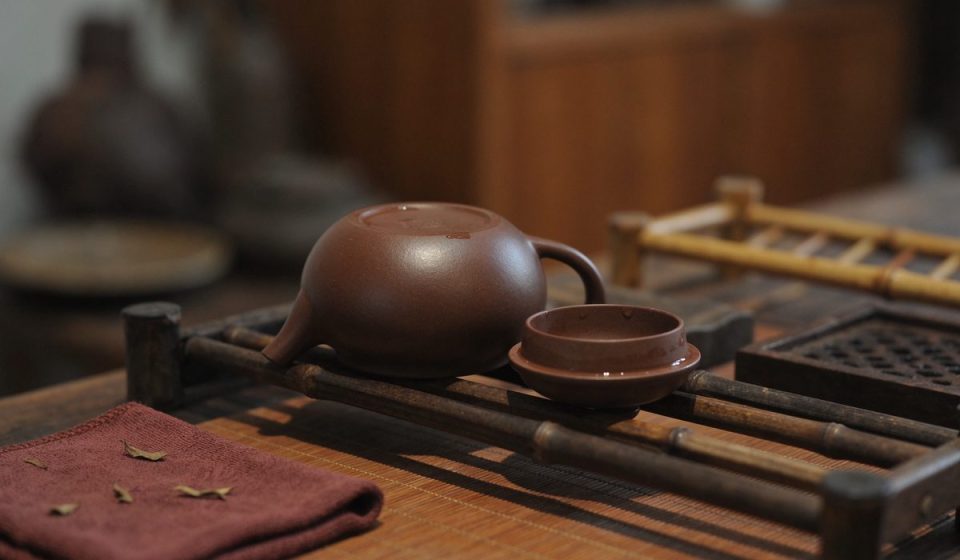
- Shake out, then set the pot on its side or upright with the lid off, in air.
- Leave it to dry completely before reseating the lid.
Resting
A pot used every day for months benefits from a rest now and then: dry it thoroughly, store it open, and leave it for a week or two. Resting is not superstition; it lets the interior dry right through, which is the main defence against odour.
What never goes near a zisha pot
- Washing-up liquid. It penetrates the open pores and leaves a scent that takes months to leave.
- Dishwasher. Detergent plus thermal shock plus mechanical abrasion, all at once.
- Boiling water poured into a cold pot. See the preheat rule.
- Steel wool, scouring pads, abrasive powder. They remove surface and grain permanently.
- Overnight soaking in tea or water. Produces staining and, eventually, mould.
The single-tea question
If you want to brew several tea types, use several pots — this is why the traditional arrangement is a shelf of small pots rather than one large one. If you have one pot and several teas, choose the tea you drink most and accept that the others will taste slightly of it.
Signs your routine is working
The interior smells of the tea you use and nothing else. The surface darkens slowly and unevenly, concentrated where hot water reaches. No white film, no sour note, no cracking at the rim. If those three hold, your routine is fine — and the elaborate rituals you read about elsewhere are optional.