Chemical Safety: Lead, Barium and Glazes on Zisha
Separating the real risks from the alarm
Questions about heavy metals in Yixing pots come up constantly, and the discussion usually mixes three different things: the unglazed clay body, decorative glazes and slips, and repairs. Only two of those are a genuine concern, and neither is specific to zisha.
The unglazed body is not a glaze risk
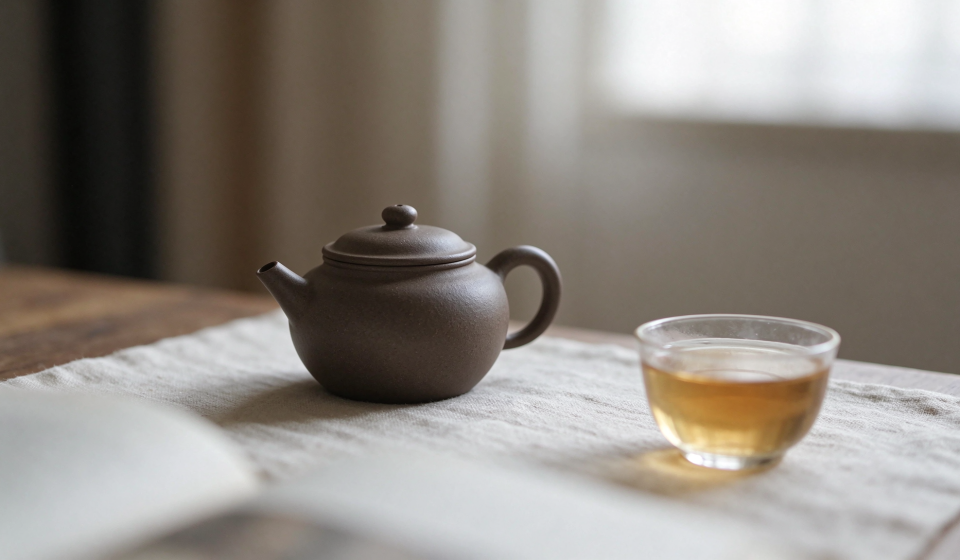
The classic ceramic hazard is lead or cadmium in a glaze or in an over-glaze decoration, which can leach into an acidic drink such as tea. A plain, unglazed zisha body has no glaze to leach from. Its fired surface is a mineral matrix of silica, alumina and iron, and the iron colour is inherent to the clay, not a pigment applied on top.
This is why a simple, unpainted, unglazed pot is the safest kind of ceramic vessel you can brew in — a point sometimes lost in the alarm about “Chinese clay”.
Where the risks actually sit
- Coloured slips and decorative glazes. A pot given a bright, even, glossy surface over a cheap body may have a coating whose composition you cannot know. The brighter and more uniform the colour, the more carefully it should be treated.
- Painted decoration and metallic finishes. Gold-coloured trim, painted patterns, glittery effects — these are the kinds of surface treatment where metal content is a real question.
- Repairs. A cracked pot repaired with an unknown adhesive or filler is a different object from the pot that left the workshop. Ask what was used; if the answer is vague, do not brew in it.
- Non-food use. Some decorative pots are made as ornaments, with materials not intended for food contact. They are fine on a shelf, not on a tea tray.
What is known and what is claimed
Chinese ceramic standards exist for food-contact ware, and reputable workshops work to them. But there is no independent certification scheme that follows a pot from a market stall to your table, and testing a single pot in a laboratory costs more than most pots. So the practical advice is about provenance and surface, not about certificates.
A seller who can name the workshop, the clay family and the firing, and who will show a continuous video of the actual pot, is offering something more useful than a slogan about purity.
Practical checks you can do
- Look for glaze. A plain pot should look matte and granular. Anything shiny, mirror-smooth, or evenly coloured in a strong hue deserves a second look.
- Look inside. The interior should look like clay, not like a painted surface, and should be the same material family as the outside.
- Avoid novelty finishes. Painted, gilded, “jade-look” or iridescent pots are decoration; use them as decoration.
- Smell and rinse. A new pot should smell of fired clay, not of paint, oil or solvent. Rinse with hot water; any residue that colours the water is a warning.
- Do not “seal” a pot. Oils, waxes and coatings applied at home to make a pot look older are the most common way people introduce something into a pot that should not be there.
A proportionate conclusion
A plain unglazed zisha pot from a workshop that will answer questions is a low-risk vessel for hot tea — lower, in fact, than many glazed ceramics. The risk rises with decoration, with anonymity, and with repairs. Buy plain, buy from someone accountable, and do not treat a pot as unsafe merely because it comes from China, or as safe merely because it was expensive.